
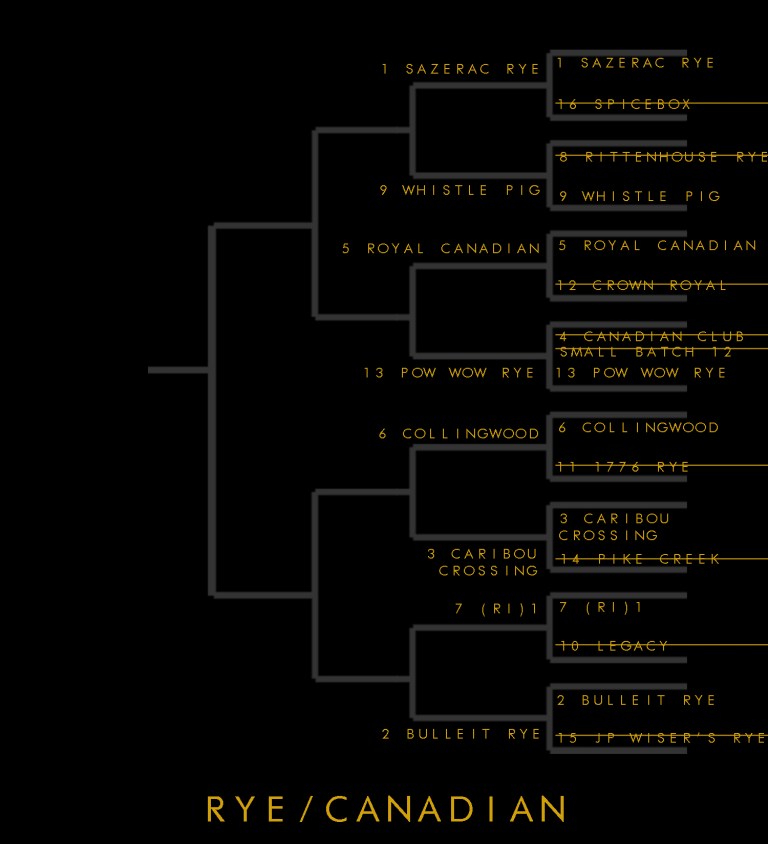
Round 1

#2 Bulleit Rye vs #15 JP Wiser’s
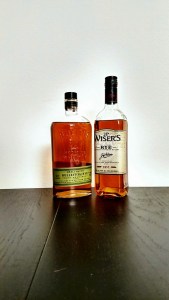
Bulleit
The Bulleit is smooth, with a little heat. You can feel it sit in your chest a bit, and the flavors linger nicely. What are those flavors? Strong rye notes and almost a little hint of something floral, but still with pepper from the rye. The higher proof comes through.
Wiser’s
The Wiser’s is very light, sweet, smooth, and with no burn. Unfortunately, there’s not much character beyond some sticky sweetness covering an almost ethanol taste. Overall, it’s light, and semi-medicinal.
Winner: Bulleit
#7 (Ri)1 vs #10 Legacy Canadian
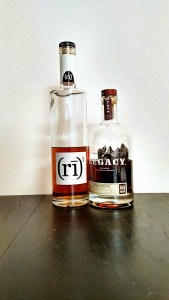
(Ri)1
This is surprisingly light and very smooth. It gives a little heat, which is nice as it provides some character on top of the lightness. You get a definite rye taste; it’s even a little bready. It does leave somewhat of an ethanol aftertaste which is not the most pleasant, but overall good.
Legacy
This sits thick and creamy on the tongue with very strong toffee notes. It’s a pleasant sweetness. Unfortunately, the character then rapidly changes, leaving a very sour aftertaste on the back of the tongue that lingers far too long after you’ve swallowed. Even 30 seconds later I found myself hoping for the overpowering aftertaste to pass, and it did not. I thought this could be an upset bid, when I first sipped it but the aftertaste really ruins it.
Winner: (Ri)1
#3 Caribou Crossing vs #14 Pike Creek
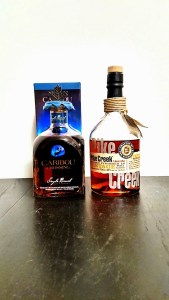
Caribou Crossing
Sweet with a little peppered rye spice after a moment. Incredibly light feel and no burn, but there is a nice alcohol taste character that still comes through. The aftertaste is certainly sweet, even a little sticky sweet, and lingers longer than expected given how light it feels in the mouth, but it is a very nice way that is not overpowering or too sticky like many other Canadian whiskeys
Pike Creek
Definitely more rye flavor and a bit more punch than the caribou. Has a little heat, which very subtly warms the chest for just a split second and gives a bit of a tingle in the nose. What’s most distinct is the texture, which is thick and heavy in the mouth, almost like the residue left on the tongue after sucking on a Werther’s toffee. The aftertaste here is also a little sticky sweet and a little sour, and not quite as pleasant
Overtime
These two are neck and neck as the Caribou Crossing is perhaps a little lacking up front, but lingers very nicely while Pike Creek has the opposite problem with a pleasant start that trails off a bit into a more sour/sweet. This one had to go to overtime as I had to pour a second comparison, and in the end, it goes to the Caribou Crossing by a hair: it presents itself as a bit more mature and wins on its more pleasant lingering aftertaste. If I was judging this as a value play, and not based on taste alone, the Pike Creek would have taken it.
Winner: Caribou Crossing
#6 Collingwood vs #11 1776 Rye
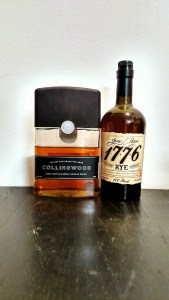
Collingwood
Extremely smooth, but not boring. The sweetness is almost closer to that nutty sweet than sticky sweet. The flavor fades very quickly with almost no aftertaste other than that slight, nutty lingering. It has less distinguished character than the 1776, but in this case that’s ok, as the 1776’s perfume-ish character is not 100% positive for me.
1776
The extra ten percent ABV is immediately apparent, but for a 100 proof rye it’s surprisingly light. This also has surprisingly little aftertaste or burn – though there is some. There’s a somewhat unfortunate chemical taste that I can’t quite place (something medicinal like the taste left after swallowing some medical pills or supplements) and it becomes more pronounced in the aftertaste. The rye spice is quite nice, but its overshadowed a good deal by whatever that lingering taste is.
Winner: Collingwood
#4 Canadian Club 12 vs #13 Pow Wow Botanical Rye
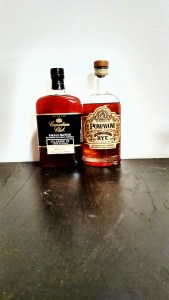
Canadian Club
The first sip caught me off guard with its astringency and I actually coughed from it. Surprisingly almost a little bitter/sour for a Canadian whiskey. I would not have guessed it was twelve years aged as it has a young, slightly raw character to it. The aftertaste is also a bit on the sour side. The second and third sips were indeed smoother, but still tad sour.
After waiting a few minutes then coming back it felt much more mellow. It still has a nice spice to the nose and a bit of astringency, but was still coupled with the slightly sour aftertaste (though again, less pronounced).
Pow Wow
The botanicals really come forward in this by comparison – although I would not generally characterize it as extremely floral on its own like you get in other infused spirits. It is nice and smooth with a lot of character (some of which will not be for everybody). It has more rye spice which shows through than the Canadian Club, and I can’t decide if, in this case, that’s something pleasant that’s hidden by the botanicals or if it’s something that compliments the botanicals – I lean towards the latter. This has a somewhat perfume-ish character, which is more to be expected given the botanical infusion, but it is not overwhelming.
Winner: Pow Wow
#5 Royal Canadian vs #12 Crown Royal
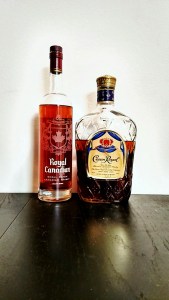
Royal Canadian
More rye than I would have expected right out of the gate, followed by a touch of sweet on the back of the tongue, then a nice mellow burn in the chest as it makes its way down, with a lingering sweetness. The sweetness isn’t too sticky or candy like and balances nicely with the rye notes. The burn is not at all intense, just enough to let you know it’s there. The extra but of rye that shines through and the layering of those notes with the sweetness are what put this whiskey ahead, just barely.
Crown Royal
Sweet up front and incredibly smooth. Nice vanilla notes come through and a bit of toffee, with maybe the subtlest hint of rye, but very subdued and mild. The Crown Royal is certainly light in the mouth and goes down easily without any burn. It seems a bit more straightforward. It is a little bit astringent, but not in an unpleasant way.
Note
It’s a shame to see Crown go this early. Having gone through more of the tastings, it feels this one may have been mis-seeded at #12.
Winner: Royal Canadian
#8 Rittenhouse vs #9 WhistlePig
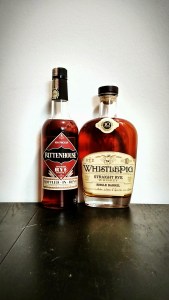
Rittenhouse
Extremely pleasant rye notes. Surprisingly smooth for the 100 proof, and this whiskey clearly differentiates between “heat” and “burn.” There is nothing terribly burning about it, but a warmth expands outwards in the chest as you drink it – in a fully pleasant way. A little bit of spice in the nose. I’m almost surprised by how subtle the flavor is, all things considered – which makes it extremely drinkable, but in some ways lacking a touch. There is a little but of alcohol (as in ethanol) taste that pokes through beyond the rye, especially in the aftertaste, but it only lingers a second with the peppery prickling on the lips and nice warmth in the chest the lingering factors.
WhistlePig
Almost a little buttery in texture – thick and delicious. The first time I’d tried this – a few months back – the rye wasn’t as pronounced to me, and I remember it being a bit sweeter, but this is not a bad thing. It is exceptionally smooth, with a good dose of peppery rye layered in that thick, viscous texture. It has the most minimal amount of burn and a nice, slight sweetness which the Rittenhouse doesn’t express. That sweetness lingers a bit too, leaving you with a warmth in your chest and a pleasant feel on your tongue.
Note
This is the head-to-head I was most intrigued by going into this region, and it didn’t fail to meet my expectations. Both were great, but for slightly different reasons. I felt the WhistlePig was under-seeded, but if this was a value-play, the Rittenhouse would take it. Still, on taste alone the WhistlePig wins it, but it was closer than you’d expect
Winner: WhistlePig
#1 Sazerac vs #16 Spicebox
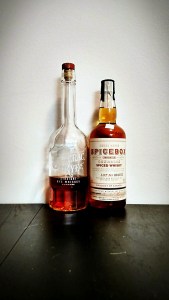
Sazerac
Very light and smooth. Nice rye notes in a surprisingly smooth way. Has all the flavors without the harshness, but still shows it’s chops. A little bit of spice, but tastes damn mature for its age. Nice warmth in the follow and a pretty perfect amount of lingering flavor.
Spicebox
Extremely sweet. I’m very surprised this isn’t considered a flavored whiskey – but if it was, it would be my favorite in the category. I feel there must be some added ingredients to this, but if not, they’ve done an amazing job expressing a ton of flavor – it just tastes slightly artificial and overly sweet. By comparison, this maybe should not have been included in this category.
Winner: Sazerac
Round 2
#2 Bulleit Rye vs #7 (Ri)1
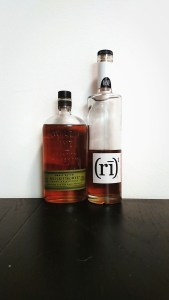
Bulleit starts with a solid punch of hot rye that sticks with it throughout. The (Ri)1 is a bit softer and rounder, with the heat really building as it sits in your chest. It doesn’t have as much of a kick of heat as a slow building warmth. After tasting both I checked the labels, assuming Bulleit would be the higher proofed whiskey; even though it’s only a 1% difference – so really the taste shouldn’t be impacted – from taste alone, I would have certainly guessed the Bulleit had a higher ABV.
The Bulleit’s rye nature is more of what you’d expect from an American straight rye, while the (Ri)1 borrows a little bit more from our northern bretheten, giving more hints of soft and sweet, rather than dry and spiced grain. Another sip of the Bulleit reveals a bit more hidden sweetness but also a bit of youth in a raw alcohol flavor.
This one is close, but I give the (Ri) 1 a slight edge. It feels a little more balanced and more easily sessionable, but both are undoubtedly good selections.
Winner: (Ri)1
#3 Caribou Crossing vs #6 Collingwood
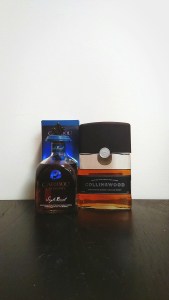
It’s a bit of a surprise, coming back to Canadian whiskey after spending a good bit of time in other categories, to be reminded how sweet whiskey can be. The first sip of the Caribou Crossing really impresses though – which I remember it did not when I tasted it in the last round. This is still very sweet, no question about it, but I am able to pick out more wood tones and definite rye (and maybe wheat as well). Given the somewhat peppery rye underneath the sweet, it feels like there should be some burn, but it never comes – you only get a slight peppery heat, which gives it more character than burn or warmth. At the end, there is still a slight ethanol taste that detracts slightly.
The Collingwood is likewise deliciously sweet, blasting notes of toffee and caramel, it almost feels suited as an ice cream topping. Again, near no burn whatsoever. I don’t know if it’s the maplewood finishing, or if there is an additive for sweetening, but it’s almost hard to believe this flavor can be achieved.
Comparing the two, the Caribou is a little lighter and oilier, whereas the Collingwood feels a bit dense.
Overtime
Despite both being sweet Canadian whiskys, they are actually quite different , and both good for different reasons. As such, a second tasting is needed to decide which profile I prefer.
In the end, I’m going to give it to the Caribou Crossing by a hair. I don’t necessarily feel it is as approachable as the Collingwood. But it presents a bit more depth and I’m less skeptical of how the distillers got it there – I may be totally wrong in that, but the balance of flavors just taste less artificially achieved. That’s not to say Collingwood is by any means bad. Dollar for dollar, I’d take the Collingwood, but the Caribou Crossing seemed to have more layers, more to explore, and felt a bit more grown up.
Winner: Caribou Crossing
#5 Royal Canadian vs #13 Pow Wow
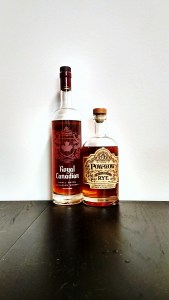
The Royal Canadian is a good bit sweet, a little oily, and has some nice rye perceptible with the sweetness. Also has a light alcohol note, but almost no bite. This is much subtler than many other Canadian whiskeys and also expresses a bit more of a range of character. The Pow Wow, on the other hand, presents more of a floral pallette backed by the rye. The alcohol is perhaps a little more present with this one and it has more spice than the Royal Canadian, leaving a slight prickling on the lips and a touch of chest warmth. The botanical I fusion definitely makes this rye unique, but I could also see it making a consensus of opinion hard to achieve. I, for one, quite enjoy it – and seem to enjoy this whiskey more each time I drink it. The biggest knock I have is that the first taste is of raw, young alcohol, but then the spicy rye shows up, mellows, and leaves behind a range of floral notes which linger nicely.
Revisiting the Royal Canadian, it feels almost a bit flat and one-dimensional after tasting the Pow Wow. It is still good, and a great expression of Canadian Whisky, but doesn’t provide quite as much depth nor as interesting of a drink.
Winner: Pow Wow
#1 Sazerac vs #8 Whistle Pig
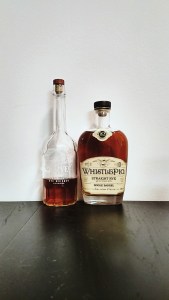
What a shame to have to pin these two against one another, but at the same time, what a joy to get to enjoy them side by side.
The Sazerac comes in with full force rye, but is somehow very light in the mouth and extremely smooth for how pronounced the rye flavors and grain notes are (I turn to Sazerac fairly often and feel like this is truer during this tasting than normally, almost as if water had been added). It has loads of delicious spice, just enough heat and pepper to give a flare in the nostrils, and presents more of a dry, spicy, and astringent rye than a sweet, thick rye. The Whistle Pig is a bit oilier, and certainly more astringent, actually. It virtually pulls all the moisture from your mouth if you swirl it around to get at all the flavors. It packs in a whole mouth full of grainy rye notes, in a more in-your-face manner than the Sazerac. It feels more alcoholic (which it is) but still manages to avoid a real burn, instead offering more spice. Although it is aged longer – 10 years vs somewhere in the 4-6 year range – the Whistle Pig feels a bit less mature. Whistle Pig also presents a much longer finish, which is welcomed, although the shorter Sazerac finish is more enjoyable while it lasts.
After having given each a proper go, I rapid-fire tasted these back-to-back, which provided an interesting comparison. The Sazerac was lighter, a tad bit sweeter, and a bit more balanced. The Whistle Pig was bolder, fuller, more in your face, and loaded with spice. These are both pretty damn good whiskeys, and I strongly recommend Rye fans, particularly those partial to dry and less sweet rye, try both. But in this tasting, the Sazerac wins.
 theamateuralcoholist.com